
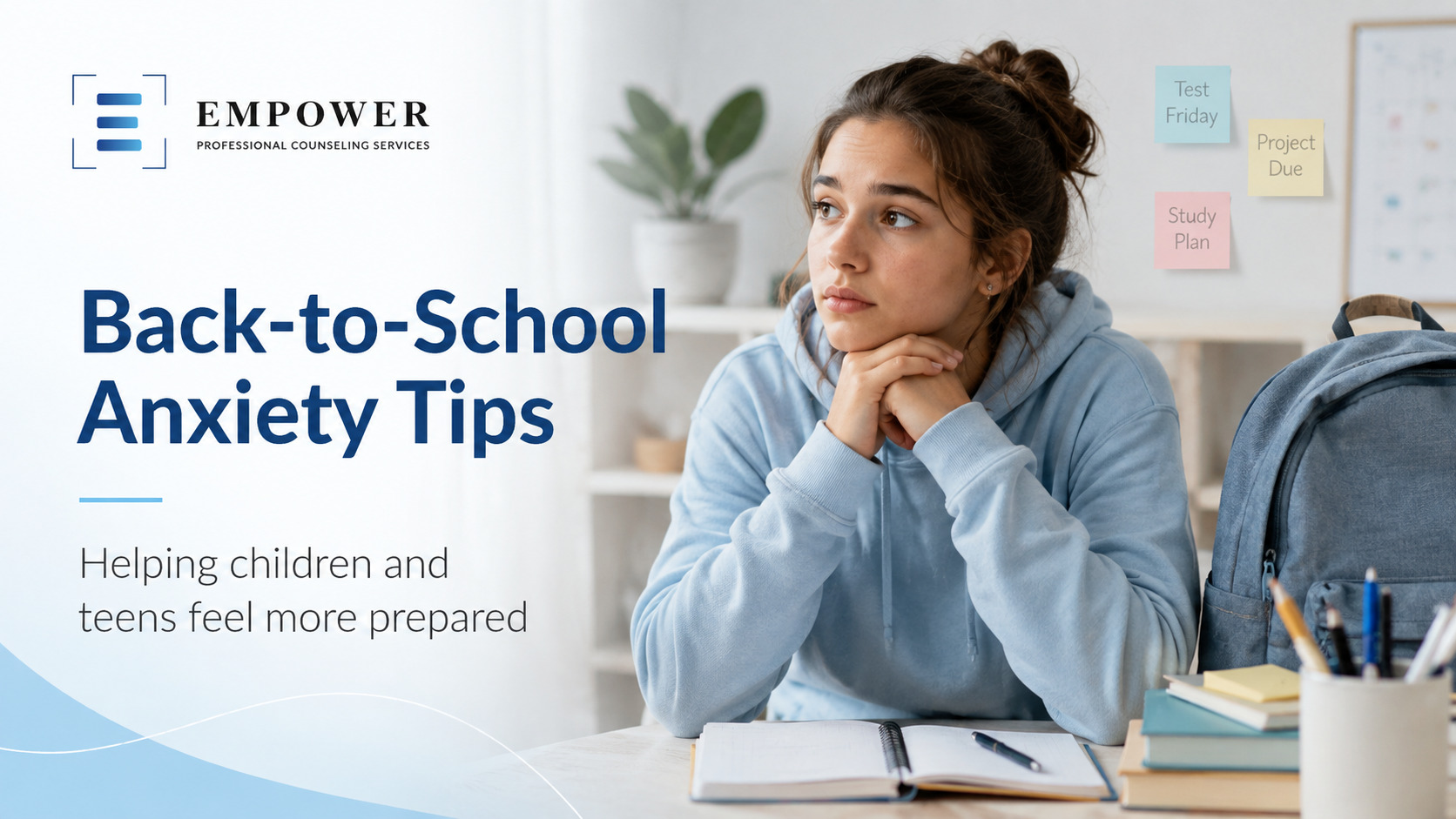
Back-to-School Anxiety: How Parents Can Help Children and Teens Feel More Prepared
The beginning of a new school year can bring excitement, opportunity, and a fresh start. It can also bring uncertainty, pressure, and anxiety.
For some children and teenagers, returning to school means worrying about new teachers, unfamiliar classes, academic expectations, friendships, bullying, sports, or fitting in. Even students who usually enjoy school may have difficulty adjusting after weeks of summer freedom.
Some nervousness before the first day is normal. However, when worry becomes persistent, intense, or begins interfering with sleep, relationships, school attendance, or everyday activities, a child or teen may need additional support.
What Does Back-to-School Anxiety Look Like?
Children and teenagers do not always tell their parents that they feel anxious. Instead, anxiety may appear through changes in their mood, behavior, or physical well-being.
Possible signs of back-to-school anxiety include:
- Difficulty sleeping or frequent nightmares
- Headaches, stomachaches, or feeling sick before school
- Increased irritability or emotional outbursts
- Avoiding conversations about school
- Constantly asking for reassurance
- Withdrawing from friends or family
- Becoming unusually quiet or worried
- Refusing to attend school
- Difficulty concentrating
- Sudden changes in eating habits
- Increased perfectionism or fear of making mistakes
One difficult morning does not necessarily indicate a serious concern. Look for patterns. Symptoms that continue, become more intense, or interfere with your child’s daily life deserve attention.
Start the Conversation Without Applying Pressure
A child who is anxious may not immediately know how to explain what is wrong. Questions such as “Why are you so upset?” may feel overwhelming.
Try opening the conversation with calm, specific observations:
“I have noticed that you seem worried when we talk about school.”
“You have mentioned your stomach hurting several mornings this week. What do you think might be contributing to that?”
“What part of going back to school feels the most difficult right now?”
Listen without immediately correcting, minimizing, or solving the problem. Statements such as “There is nothing to worry about” are usually intended to reassure, but they can unintentionally make a child feel misunderstood.
Instead, acknowledge the emotion:
“It makes sense that starting at a new school would feel uncertain.”
“I can understand why that situation is making you nervous.”
Validating an emotion does not mean agreeing with every anxious thought. It lets your child know that it is safe to talk with you.
Reintroduce School Routines Gradually
A sudden transition from summer schedules to early mornings, homework, activities, and structured bedtimes can add unnecessary stress.
Begin adjusting the household routine before school starts. Gradually move bedtime and wake-up time closer to the school schedule. Establish predictable times for meals, bathing, preparing clothes, and turning off electronic devices.
You can also reduce uncertainty by:
- Visiting the school or reviewing the route
- Looking at the school calendar together
- Organizing supplies in advance
- Discussing transportation arrangements
- Practicing the morning routine
- Creating a quiet homework area
- Identifying a trusted teacher, counselor, or staff member
Predictability cannot remove every challenge, but it can help school feel more manageable.
Help Your Child Focus on What They Can Control
Anxiety often grows when a child tries to predict every possible problem.
Help your child separate what they can control from what they cannot. They may not be able to control who is in a class or whether an assignment is difficult. They can control whether they ask questions, prepare their materials, practice healthy study habits, and reach out for help.
Encourage small, realistic goals. A socially anxious student, for example, does not need to become the most outgoing person in class. A more manageable goal might be introducing themselves to one student or speaking to one teacher during the first week.
Recognize effort rather than demanding a perfect outcome.
Teach Simple Calming Strategies
Children and teens can benefit from practical tools they can use when anxiety begins to rise.
Helpful strategies may include:
- Taking slow, controlled breaths
- Naming five things they can see and four things they can feel
- Stretching or taking a short walk
- Writing worries in a journal
- Listening to calming music
- Using encouraging self-talk
- Taking a brief break before returning to a difficult task
Practice these strategies during calm moments. Skills are easier to use under stress when they have already become familiar.
Work With the School When Necessary
Teachers, school counselors, coaches, and administrators may notice behaviors that are not visible at home. Ask what they are observing and whether your child appears to be struggling academically, emotionally, or socially.
Maintaining communication with the school can help everyone identify patterns and respond consistently. The goal is not to remove every uncomfortable situation. It is to give the student appropriate support while helping them develop confidence and coping skills.
When Should Parents Consider Counseling?
Consider speaking with a mental health professional when anxiety:
- Continues for several weeks
- Causes repeated physical complaints
- Interferes with sleep or eating
- Leads to frequent absences or school refusal
- Causes significant emotional distress
- Prevents participation in normal activities
- Affects relationships with friends or family
- Does not improve with support at home
Counseling provides a confidential environment where children and teens can explore their worries, understand their triggers, and develop healthier coping strategies. Therapy can also help parents learn how to support an anxious child without unintentionally reinforcing avoidance.
Back-to-School Support Is Available
A new school year does not have to be managed alone. Early support can help children and teenagers feel heard, prepared, and more confident as they adjust.
Empower Professional Counseling Services provides compassionate virtual counseling to clients throughout Florida. Our personalized approach helps individuals and families address anxiety, stress, difficult transitions, relationship concerns, and other emotional challenges.
To learn more or request a consultation, call 850-328-4464 or visit empowerprofessionalcounseling.com.
This article is intended for general educational purposes and is not a substitute for individualized medical or mental health advice.